Recently, a group of people with whom I used to sing reunited for a memorial service for one of our beloved members. (Hence the arrow pointed at the missing member, upper left.) GraceNotes has been a source of joy for me, and it was great to see each one of them, despite the great sadness we all felt at the loss of a man God used to bring outsiders into His fold. We reminisced about some hilarious times together through the years, as well as the uniqueness of the entire group. The years have crept in and we are scattered here and there. But coming together to join our voices brought back so many raw emotions that it was beautiful and overwhelming to experience. Some members I see on a regular basis; others just occasionally. For still others, it had been years since I had a chance to catch up on what their lives are about these days. Still more members communicated with us from afar.
Two things have been on my mind since, and I’ve been chastising myself for not getting them written down sooner. The first was the ease at which we gathered, hugged, and talked together, like it was just yesterday since we had sung together. There is something about the bond that happens when we share our lives with others in such a tightknit group, particularly as we lifted our voices in harmony together. I was reminded of how much I had wanted to be a part of a small choir while in college many years ago. I was incredibly disappointed that I was not chosen, especially due to the reason. How joyful it was to be asked into GraceNotes years later, and have the pleasure of continuing my favorite pastime of singing with such a talented and spiritual group of people. Being a part of this “family” helped me through some very dark times, and I will always be grateful for the privilege.
The second thing I noticed was the beauty I saw in each of these group members. I never viewed them as any less, but there was something about the beauty of age. Maybe it is the softening of age – not in a weak sense, but in the maturity, a strength, if you will, that calls for less judging of self and more loving of others. Maybe it is the trials that each has been through and not only survived, but thrived in the face of pain or stress or loss. Maybe it is just the beauty of Jesus shining through because we’ve discovered it is ALL about Him. Maybe it was just me – seeing each one in a different light – seeing a beauty that is beyond the surface, that shines through in love, in acceptance, in true empathy. We’ve always heard that “beauty is in the eye of the beholder.” I can tell you. I beheld beauty in each one. A beauty that surpasses any pageant or performance. Beauty that, in the face of sorrow, appreciates the loss because it says we experienced great love.
GraceNotes Now
Reunions are not always pleasant events, much less happy ones. Joining together to say, “So long,” to a friend and loved one is especially difficult. When you’re able to see the beauty of family and friendship, your heart swells up and leaks from your eyes. There is grief for what is no more. There is joy for what was. And there is hope for what will be someday – our all-inclusive reunion with Jesus and all the other beautiful people who have touched and inspired me. I want to make sure they know how beautiful they are to me, and how grateful I am to be part of this family.
Friday was a day of remembrance related to a traumatic day in American history, one that I actually remember well. I was barely 16 months old when President John F. Kennedy was assassinated in 1963. Martin Luther King, Jr.’s assassination occurred when I was almost six years old in 1968. I was clearly too young to feel the impact of trauma or fear or anger, for either of those significant events. September 11, 2001, was very different. I clearly remember the trauma, from a distance, that I felt that day.
I was a school bus driver, and my days started very early. Before daylight, usually. On August 23rd, less than three weeks prior, my father had passed away after a long, excruciating struggle resulting from a stroke. We (my mother, daughter, and I) had flown back to my homeplace in Eastern Kentucky to bury him near my brother and grandparents. I missed him greatly, and still do, but his suffering had been great and his new found peace was somewhat of a relief, but the loss was still on my mind. After the events of September 11th, my mother reported being grateful that my father had passed before this event for two reasons: we might not have been up to flying back to fulfill his wishes of being buried in Kentucky, and he would have been heartbroken to hear about what was happening to his country.
I drove up the freeway that morning, listening to KLOVE, finding strength in the encouraging words of the songs and uplifting stories I heard. I turned on my signal to exit the freeway and head toward the bus yard. Those songs were interrupted by a breaking news story about a plane having hit one of the towers of the World Trade Center. There was some brief conversation regarding whether it was an accident or airplane malfunction or a deliberate attack. Somewhere in the back of my mind I recalled a WTC bombing years earlier, but being so far removed, I new very few details of that event. I don’t remember the remainder of the route to the bus yard, because the next memory was walking into our little house-turned-office, looking at the television screen to see one tower on fire as yet another plane flew directly into the other tower. I remember thinking, “This must be what war looks like.” It seemed so surreal as news stations showed the havoc going on at street level and in the air, as well as two additional locations.
It was the first time in my life I remember feeling a fear that extreme. We were instructed to proceed in picking up students and transporting them to their schools, then to return to the bus yard on stand-by status, prepared to return them to their neighborhoods in the event there was a local threat. The conflicting thoughts of completing my duties for the children of the district versus the desire to rush to my daughter’s school to pick her up and find some safe place to hide were high. How would she get in touch with me if something happened locally? How was the school handling the sharing of the events with students that let them know of the threat without frightening them to death? So many emotions were running through me like a roller coaster ride. For weeks.
It was a day I will never, ever forget. Watching the devastation, the horror on the faces of those running for safety, realizing the loss of human life as the towers disintegrated into ashes, the loss of those who rushed to the scene to save lives – it was almost too much to take in. Tears flowed and I was thousands of miles away. I didn’t even personally know anyone who died in any of those three locations. I can’t even begin to imagine the heartbreak of those who experienced it firsthand or realized the phone call they received from a loved one was the last time they would hear his or her voice.
It still seems surreal to me, as I watch various memorial events acknowledging such a painful experience. My heart still breaks for the families who have had to go on living without a loved one, particularly the children who lost parents and now only have their memories on which to rely. How could humans be so evil and cruel? I don’t understand what makes people believe this kind of action is something for which they want to be known. I do know that when devastating events happen, there is also good. There are stories of people who jeopardized or even gave their lives to help someone else. There are those far removed from the situation that showed up to comfort, to clean, to search for life, to give a kind word, to give monetary gifts, to tend to the physical and emotional needs, or to pray from afar for all affected.
In my opinion, positive things happen at substantial levels when the most traumatic and disturbing events occur. It reminds me that there are still a considerable number of human beings who have compassion and empathy for those directly affected by natural or human-generated disasters. It confirms that support is the single most crucial element to success for humankind.
I used to love driving. Until I moved to a city. Until I spent nine years driving a school bus. Two of the deciding factors for the end of that career were an accident and a near miss, neither of which were my fault. The gravity of the responsibility for the safe transport of other people’s children was too heavy of a weight in a society that has no idea how to sit still, wait, or slow down. The driver who backed out of her driveway into the side of my bus on a residential street thought the driver in the 40-foot yellow Twinkie loaded with high school students should have stopped. The driver who was traveling so fast that he or she never saw my turn signal to move over another lane and had to hit his brakes and spin a 180 before coming to a stop against the cable in the median. He kept from hitting my bus loaded with high school students returning from a field trip by mere inches.
I have been reminded of these situations recently as I have noticed drivers pulling out in front of me at the last minute, resulting in my slamming on the brakes to avoid hitting them. Several times this has happened, and when I looked in the rear view mirror, there were no vehicles in sight behind me, indicating they could have waited for me to pass and pull out without potentially causing an accident or even interrupting the flow of traffic. It occurred to me how much this is related to society’s addiction with now, as I wrote about in this post. How much we I can’t wait one more minute. How we I have to have more of whatever it is that feels good. Because my appointment or schedule is more important than the other thousands who are on the road or in line for coffee. (Okay, so coffee really is an urgent matter, right?)
Just so we’re clear, I am not faultless in this behavior. Since my youth, my family had a saying that supports this concept so well. When you have an entrée or a piece of dessert that you love, and you’d like another piece, you say, “That tastes like more.” When I say it now, people give me strange looks while they process exactly what I said. The silly quip really indicates a thought process related to overuse, abuse, or the addiction of something that might be, in itself, something good. I plan my time too tight and then have to be in a hurry. I want more than I need. In reality, anything almost everything can become “too much” if we let it. Even things that are beneficial to ourselves and others. I can work too much. I can play too much. I can sleep too much. (At least that’s what I’ve been told about sleep!)
One great thing that has resulted from these observations is my own awareness. Awareness of my hurriedness so that I slow down. Awareness of my wanting more than I need so that I stop to appreciate what I have. Awareness of coworkers or friends who need some acknowledgement or encouragement so that I am staying grounded in my purpose of fun, freedom, and generosity. Awareness of what is going on with others who seem to be in such a hurry to move along or avoid something they are going through, trying to hide their vulnerability, or shame, or sadness.
So…I’m working on paying attention to my state of “hurry.” On planning ahead for traffic or lines. On noticing the sights along the journey, rather than only focusing on the destination. On being grateful for what I have – not just material things, but family, friends, education, etc. – instead of always spending time searching for more/better and wanting it now. I am learning and understanding that anything worth having takes time. Maybe it’s an “older and wiser” thing, although I am not admitting to the “older” part. Or maybe it’s just awareness of who and what I care about these days. At any rate, it’s a process, not an arrival.
Yesterday was the end of the first week of a new venture for me. Just over one year ago, I had to begin the painful experience of making student loan payments. They really cut into the budget when you complete an undergraduate and two graduate degrees. So I started looking into part time side gigs that would offer a decent wage as well as use my education and experience. I applied for related openings as an adjunct at a local community college. It took nearly a year before I received any communication at all, which was frustrating and relieving at the same time. I know I’m capable, but new things are scary.
I was nervous about the interview, just because I always am, I suppose. Something about second-guessing myself, wondering if the interviewer will “get me” and what I’m passionate about. Unexpectedly, it went much better than I imagined, and I had an appointment to complete hiring paperwork by the end of that week. It was a pretty awesome feeling. When I realized it was my responsibility to complete the syllabus beyond the skeleton of expected assignments, the panic started, since I still imagine that I’m expected to be perfect, as I wrote about in this post. I was down to the wire completing it for approval, waiting with apprehension for the response, but it passed with flying colors. (I’m hoping the first time is the worst time!)
Because I have a full time position that I love, it was just in the week before school started that I was able to drop by the school, pick up copies, and ask a few last minute questions. Last weekend, I gathered up and organized all my materials to be ready for arriving early and getting settled in the classroom. Of course, nervous energy had me in somewhat of a frenzy on Monday morning. I arrived at the classroom just ten minutes before class was to start with a plan in mind to get acquainted with students and help them feel comfortable with me on their first class of their first day. They were very gentle and accepting, completing an icebreaker activity, and asking a few questions, so the class itself went relatively well.
However, when I walked out of the classroom and across campus to my vehicle, rushing to get to my other job, all I could think of was the mistakes I had made. The computer in the classroom only had a blue screen and I was unclear as to how to reboot it without completely ruining something. (Of course, on Wednesday, I remembered that computers are generally hearty enough or have built in protections to withstand the inexperienced user.) I didn’t remember seeing anywhere about how to complete attendance, and because I hadn’t been able to use the computer, I had not been able to investigate where that should be done.
As I left campus, I got a text alert about my account balance, and my fuel light began flickering, reminding me that I had planned to leave the house early to fill up. At that moment, this venture that I had pursued eagerly suddenly felt like a failure. Would I be in trouble with the staff for not completing attendance? Was I expected to know where? How? How can I expect students to start taking responsibility for themselves if I was not prepared? What was I thinking, believing I was capable of such a task? My own negative self-talk had me calling in and quitting.
Fortunately, I began thinking about my purpose in pursuing this kind of task in the first place. How could I encourage the love of learning and inspire students to not just start, but continue on this educational journey, if I quit when I just feel like I failed? How will they learn that success comes because of perseverance despite failure? I don’t want to only tell them, I want to show them that small battles will be lost, but the war can be won. And besides, the first day has to be the most difficult and traumatic. For teachers and students. It has to get better from here, right? Besides, I told too many people what I was doing to back out now. (Accountability is uncomfortable, but it supports consistency between words and action.)
So, I punched fear in the face. I asked questions. I learned more about how things are supposed to go. I went to class two more days. No students threw rotten vegetables at me. And many are asking questions and making strong efforts to complete homework, leading me to believe I didn’t scar them too badly. I believe I even related to them by being real.
The coolest thing about Monday was a role reversal that was unexpected. At the end of my day, after I made it to the gas station on fumes and addressed my low account balance, I made my way into the restaurant where my daughter works. She rushed to give me a hug, asked about my first day, and offered me a free iced tea! She assured me that it wasn’t so bad. And when I asked about the cheesecake special of the month, she bought the slice of Caramel Apple Cheesecake for her mom for my “first day.” (I can hear Carly Simon singing “Coming around again” in my head.)
I’m looking forward to this semester and many more. And I’m hoping the journaling of this experience continues to be a reminder that one perceived failure is only part of the growth process. Not the end of goals and dreams. Success is not free of mistakes and failures, but enhanced by them.
Today was spent in orientation and training for a new gig – teaching college students at the local community college. Much of the conversation, as could be expected, was how to be effective in helping students learn. To increase their love of learning. To share a passion for learning that will be embraced. To empower students to create the life each one desires, rather than accepting the proverbial “lot in life.” During this event, I was reminded of a recent conversation I had with my “lifeline friends” regarding the interview for this position, and a string of associated thoughts came to mind.
I have always hated strongly disliked tests. In elementary school they weren’t so bad. The occasional standardized tests didn’t faze me and I didn’t do too badly on the typical regularly scheduled ones. In fact, I did quite well on spelling and grammar. (I made a point to memorize the spelling of weirdly spelled words after I overheard my parents commenting on mispronunciations, e.g., potpourri, Chihuahua, etc.) My first difficulty with tests was related to high school algebra. (I wouldn’t have passed two years of algebra without a smart friend who helped with the daily homework.) And general science. (We would need to know metric conversions in the future, they said. It would be easier, they said. Has someone created a related meme already, or do I need to do that?) And biology. (Thank you, Mr. Higgins, for assigning drawings for homework that helped me pass, since your handwritten tests were so intimidating.) And American Literature. (I love to read, but essay questions were not my thing. At all. Details do not want to stay in my memory.)
Unfortunately, the difficulty with tests, coupled with significant loss in 9th and 10th grades, became the start of the I-can’t-do-math and the I’m-not-smart belief, followed by the I-can’t-do-college-so-I’ll-bail choice after only three semesters. A few years later, I discovered personal computers, motivated by the need for a job and a boss who, somehow, believed I was capable of running his small, start-up life insurance office. He handed me the manuals and told me to go for it. I was hooked, completing the tutorials and learning the basics of word processing and merging, long before Windows was The Thing. (Yes, I know you youngsters are thinking I’m ancient to have worked with DOS and Basic programming.) I took a few classes at the Junior college and surprised myself at how well I did, and those got me a better job when the other one ended. However, I moved across the country just short of completing a certificate in computer science, and the motivation to finish was replaced by the joy of a coming baby.
In the last 10 years, I returned to school, transferring in some credits to finish a baccalaureate and two graduate degrees. Fortunately, most of those classes did not include major tests, although my fingerprints have been altered due to the hours of typing papers and answering discussion questions online. Therefore, when I was required to take board exams for two different licensures in my field, I became paralyzed with fear. The I’m-bad-at-taking-tests bug hit me and I was shaking and nervous, thinking that I was guaranteed to miss the mark “by that much.” And I felt the same trepidation when I interviewed for the adjunct position I will be starting in a few days.
When I was leaving the interview, which was the most casual interview I have ever experienced, and realizing on the spot that I not only had the job, but also had a choice of not only one, but possibly two classes, it finally dawned on me that tests were not the problem. My own self-doubt is the problem. I got to thinking about the major tests that I have taken over the years (other than my driving test, that I firmly believe was due to taking it in a car I wasn’t used to driving). Every. Single. One. I. Passed. The. First. Try. Go Figure.
“Crash” Course for the private pilot’s exam, immediately followed by the exam – Passed. (Yes, bad choice of names for a course on passing an exam for flying an airplane, but, I kid you not, that was what it was called.)
Flying exam – Passed. (First week of January. In freezing-cold Oklahoma. Flying two hours to a different airport to take the exam, where a pilot had crashed due to ice earlier in the week and knowing the examiner was mean tough.)
Two American History CLEP exams – Passed. (Huge savings of time and money, as they replaced six credit hours! They were no picnic.)
Life insurance sales exam – Passed. (What on earth I was thinking, believing I could influence people to buy life insurance, I do not know.)
ABCAC exam for substance abuse counseling licensure – Passed. (It took six weeks to get the results, and I had to catch my breathe before opening the envelope, then contain my excitement because the rest of the house was asleep.)
NCE exam for professional counseling licensure – Passed. (The proctor surely thought I needed counseling as I hyperventilated and started crying when she handed me the paper with the results.)
So … finally. FINALLY. I get that tests are not the problem. I am the problem. I second-guess myself far too much. I forget the success I have already experienced and somehow focus on the failures, believing those are the points that matter. That FAILS are what define me. Those things have an impact, sure. But they do not define who I am or limit what I am capable of accomplishing. At all. Should the fails be forgotten? Only after the lesson is learned and a fresh, new TRY is implemented. Should they be focused on? NEVER.
Maybe I’ve finally passed this test – being done with self-doubt – by writing it down to get it out of my head. And occasionally coming back to read it – as a reminder to focus on what has been accomplished and move forward with confidence.
This past week, I celebrated the anniversary of the day I was born. No, I’m not saying how many anniversaries, but the years are adding up. (And for those who already know how many, SHUSH!) I have gotten in the habit of making a big deal of birthdays, thanks to my dad, who never forgot a special day, and always did his best to make sure the day was as special as the person being celebrated. As a child, we made trips to a nearby lake to fish and picnic, to a state park to swim, or he asked someone to make a special cake for me when I accompanied him on a preaching assignment. I also watched him celebrate my mother just because he loved her. (He was allergic to chocolate, but would always bring her a hot fudge sundae with nuts when he returned from the nearest town, seven miles away. That is LOVE!)
As an adult, there have been periods when I have heard friends diminish the value of celebrating birthdays, perhaps because they were shown that it’s just another day or they may feel embarrassed by the attention. Or the years are adding up and have negative feelings about aging. At any rate, I have always believed that everyone needs a special day to be honored. I frequently receive questioning looks when I plan to celebrate my day at Disneyland. I’m not sure what the problem is. I suppose if I were married, a quiet, romantic getaway might be more appropriate. Since I’m not, the excitement and joy of “The Happiest Place on Earth” is my choice, and I refuse to apologize for that.
Here’s why. The weight of work and responsibility can be overwhelming at times, and allowing myself to enjoy being around the wonder and excitement of children reminds me that play is an equally important part of life. One incident at the park this week confirmed this notion. Disneyland is celebrating 60 years of fun and imagination. (And before you get all bent out of shape about the money being made off of poor, unsuspecting consumers, hear me out.) While our party was situated at the front of a designated viewing spot waiting for the recently updated Electric Light parade to begin, a mother asked if two children could stand in front of us when the parade started. They had tried to view the first showing, and had been cut off by taller adults and were unable to lift the four-year-olds for an extended period of time so they could still see. We gladly agreed, and made room for them in front of us. Little did we know that these two girls would provide as much, if not more, entertainment as the parade. They shared the exiting parts of their day, showing us their autograph books and naming the characters who had signed them. They got excited for every character in the parade, and when we saw the two characters from Frozen coming toward us, and asked who they were, they both, in unison, with all the energy they had, raised their arms, jumped up and down, and screamed, “Anna and Elsa, Anna and Elsa,” at the top of their lungs.
Whether you’re a fan of all-things-Disney or not, witnessing this childlike joy and excitement put life into perspective. When did life become mundane? Why do we let the mundane take away our joy and excitement so often? When did we decide that adults don’t act like that? I have so much in my life for which to get excited. I have to return to reality, but how can I make it exciting every day? I have a career I truly love. I have coworkers and clients who inspire me. I have family and friends who stand by me through thick and thin. I want to be exited about the “normal” in life and celebrate that life each day.
As these thoughts were meandering around my brain, another situation came to my attention. In recent years, the term “funeral” is spoken less regarding the formal gathering for a loved one or friend who has died, and the description “celebration of life” is used in its place. I’ve been to some of these events and they are truly celebrations of what the deceased has accomplished or the love he or she shared while alive. (The service for my paternal grandmother was one of those.) I can certainly appreciate the sentiment, and I know that many shared their feelings and thoughts while the loved one was still alive. I want to take on the challenge of celebrating others when they can hear or read my words and “feel the love.”
So … how about taking on this challenge with me. I dare you to handwrite a letter or card. To a coworker who has made your load lighter or shown strength of character. To a friend who is always willing to hear about your difficult days. To a family member who needs to know they are important enough to hear some sweet words from you. (Not an email or text alone. A handwritten note. Please.) Celebrate life now. Before someone is gone and you’re saying those things for your own comfort. (Not that that isn’t okay, as well. But really. Do it now.)
If there is any business who takes celebrating life seriously fun, it’s Disney. You may not believe in some of the concepts they support, but you have to agree that their mission is celebrating life, and cast members are taught to carry it out. And there is no requirement of proof. I wore my “It’s my Birthday!” button three days, and I can tell you it is very special when hundreds, including other guests, offered greetings. Two different eating establishments offered small, free desserts. (Not to mention, feeding my roller coaster addiction.) On top of that, more than 100 friends took the time to acknowledge my special day on social media. I feel truly loved, and I have pictures and notes to go back and read on days when the chatter in my head has me believing differently. (I know I’m not the only one who hears the negative chatter.)
Celebrate others. Allow others to celebrate you! Get excited about who you are and what you have to offer. I would dare to wager that if you’re excited about your life, those who matter will get excited with and for you.
On a day when Americans celebrate the signing of the Declaration of Independence, 239 years ago, my thoughts have been on what it takes to be a patriot. Patriotism, as defined by Merriam-Webster, is “love for or devotion to one’s country.” And I feel this love for and devotion to my country, the United States of America. My childhood was riveted with examples of people who felt a strong love and devotion for our country, and encouraged it in me. It wasn’t the 4th of July picnics, the parades of flags, or the red, white, and blue streamers woven through my bike spokes, although those things were included. I somehow felt the goose bumps and deep emotion from realizing the freedoms that I could claim and what those freedoms cost. Some have lost peace of mind because of what they experienced. Others have lost a limb or the physical ability to function as before they chose to serve. Some have given the ultimate sacrifice of their lives to protect the country they love. Whether you believe in the purpose of any particular war/conflict or not, whether those who served were drafted or enlisted of their own accord, their devotion is not merely admirable, but humbling.
Given the examples of civic and historical knowledge deficit, as seen on talk show sketches, I can gather that the focus on these topics are lacking in some schools. (Please notice the emphasis on some, as I know there are teachers who are passionate about what they do as well as their own commitment to civic duty.) It makes me sad that students are managing to graduate high school without an understanding of or appreciation for the history that has made this country great, and even the implications of and lessons to be learned from the darker pieces of the past. And yet it seems that some of the loudest voices screaming for rights are the least knowledgeable or the most entitled.
Somehow we have forgotten that our “rights” cease when they cross the line into another’s “rights.” I have the right to listen to my music as loud as I want, but my neighbor has the right to have peace and quiet. I have the right to choose the type of clothes I want to wear, but my employer who pays my salary has the right to specify the parameters of what I wear to work for safety and professionalism. I have the right to express and live my religious beliefs, and everyone else has the right to be treated with respect, even when they believe differently. You get the point. It seems that too many of us have lived in prosperous times that have made us forget or minimize what we have, always wanting more. And now.
I experienced the privilege of spending a month in Papua New Guinea more than 33 years ago. What a beautiful place to see, wonderful people to meet, and very different culture to experience. It was a time I will never forget, because the people who live with far, far less convenience, are more gracious, generous, and grateful than any others I have met. I admit, I was extremely glad to be back on American soil (mostly because I missed hamburgers and our crispy French fries, and I have a texture aversion to fresh pineapple), but with a renewed appreciation for my country due to the grateful attitude I felt there. You don’t have to visit another country to gain a new appreciation of your own, but it is a positive result if you do.
How can you and I show our patriotism to this great country? For those of us who didn’t have the opportunity to serve or chose a different path, showing our patriotism must come in different ways. We all can’t get involved in the political scene, but we can show our gratitude for all we have access to rather than complain. We can ask for transparency of government offices. We can treat each other with kindness, respect, and grace, even when they believe differently. And pray. Enough of the nasty name-calling and hateful rhetoric. Enough of forcing our rights while infringing on the rights of others. Don’t let those who shed blood for this country to have died, lost limbs, or suffered emotionally in vain. And when you’re at an event and hear our national anthem, stand tall with pride and gratitude, or stop on your refreshment run, remembering the price of freedom. God bless America.
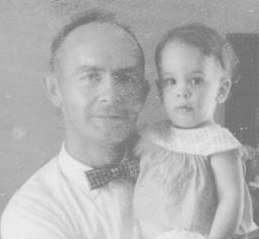
He came from an economically depressed region of the country to a family that would most certainly be considered poor by most standards. He became a hero to me (and many others) and his legacy lives on for and through me. He was my dad. And his strength came from his relationship with Jesus Christ.
My dad grew up in Harlan County, Kentucky, born to a young couple and two older brothers. In his first years, he was ill as a result of a vitamin deficiency. A younger brother died around age 2. At some time in his young life, his parents operated a boarding house for workers of the mines or railroad, where his mother cooked for the boarders. Smart, outgoing, and talented (as were his brothers), he learned to play the guitar with ease. His mother carried a gun for some time, ready to take the law into her own hands against the men who had killed her brother. When missionaries came to the area to minister, my grandmother found God, and soon my dad and his brothers were sent a few counties away to a Christian boarding school. My dad was only 13 when he started 9th grade away from home.
It was there that he fell in love with God and the piano. He had such a natural talent for the piano, that when at one point he got bored and wanted to quit, his teacher informed the president of the school. This small but fiery lady informed him she would send him home if he quit the piano. He agreed to stay, knowing the punishment he would receive at home would be far worse than continuing piano lessons. His love for playing grew and he dreamed of being a concert pianist, famous around the world. In 12th grade, he felt God was calling him to preach, but the dream of being famous influenced him to deny that call. Before that school year was finished, he was in the hospital with a fluid-swollen spinal column. A spinal tap was done, and within hours he was paralyzed from just above the waist to his toes. Doctors were not sure if he would live, and they were certain he would never walk again. He promised God that he would preach from a wheelchair or bed if God would spare his life, and he always said that God healed him.
He went through physical therapy and eventually regained his strength and was able to walk. His older brother, Alvin, would carry him from the bed, setting him on crutches to wash the dishes for his mother. (When he spoke of this, he would always get emotional with admiration for a brother who was strong enough and kind enough to care for him this way.) Even though he wasn’t back to full strength, he was drafted into the Army. Within a few weeks of marching, he was hospitalized and discharged. He returned to the Bible college associated with the Christian high school, where he spent time working at the radio station. He met my mother and they married shortly after she graduated from the college. He was told that he would never father children, but that clearly turned out to be untrue!
He was determined to have his family experience as much of the country as possible. We traveled every summer – to Ohio to visit my mom’s family, to Michigan to visit college friends, to spend time with uncles, aunts, and cousins at beautiful sights where revivals were scheduled, to historical sites in Virginia, Pennsylvania, and various other places to encourage our patriotism. No matter what the sights were, no matter how far he had to walk, he sacrificed for us to see it, knowing that his legs would ache and shake all night, preventing good sleep.
My brother, Chris was born while they completed their baccalaureate degrees at Asbury College, living on the property of my grandparents who had moved there to work at the college. Dad also learned the craft of piano tuning. They returned to the mountains of Eastern Kentucky to minister in the organization where they had completed high school and Bible college. Dad taught piano, organ, voice, chorus, and piano tuning at the college, and spent some time directing band at the high school. He directed performances of Handel’s The Messiah for years. He also took opportunities to preach or play the piano in revivals, at camps, and various church services across the country. Dad was required to take one night a week to relieve the faculty member who was in charge of the men’s dorm. If Mom had duties on the same night, he would take me with him to keep him company in Mr. Davis’ office. The men were supposed to be studying during that time, but many of the them came to him to get his fatherly advice or exchange jokes. I just sat and watched a master encourager.
When my brother was about to turn 20, just months after his wedding, the family (without me) decided to visit a state park for a weekend to celebrate his birthday a week early. They dropped off their things and proceeded to view the sites where Chris was involved in a fall. He had a head injury and was unconscious for two and a half weeks before he died. I listened to my dad’s body-shaking sobs on the way to the hospital, wondering if I would lose him, too.
He changed after that. Oh, he still told his same old, lame jokes. He still had a clever quip to other smart aleck words or actions of students, but the brokenness was obvious, at least at home. If Chris’ name was mentioned, he was immediately shedding tears, and so I refrained from bringing him up at home, in fear that it would be to heartbreaking for him. When I made it to college, I had the privilege of singing The Messiah under his direction. I watched tears stream down his face as we sang, “Surely He has borne our grief and carried our sorrows,” and he put every ounce of energy into leading us. I don’t know of anyone who could sing with less than 100% effort, knowing the kind of grief he had experienced.
And that is what makes him my hero. I can’t imagine the oppressive grief of losing a child. Getting up everyday, working … just putting one foot in front of the other. I’m not sure how people can do it. But Dad kept going on. He kept giving piano lessons. He kept directing the chorus. He kept reading God’s Word daily. He kept preaching. He kept showing everyone he met how God loved and sustained him.
Years later, Dad had a stroke and was unable to care for himself or even talk for 14 months before he died. My daughter overheard me telling someone about my dad’s dream of being a famous concert pianist. She later said to me, “Mom, Grandpa was famous,” and proceeded to remind me that he knew people around the world. She was right. He taught students for 35 years, some of whom are missionaries around the globe. He tuned pianos all over Eastern Kentucky and many other states. He preached all over the country. He even traveled three times to Papua New Guinea to tune pianos for missionaries, to preach, and to sing.
Dad was a small-framed man, and he walked with a significant limp all my life. Most people catching a first glimpse of him would not consider him strong. And yet he was the strongest man I have ever known. (Besides the fact that he could take a much larger man to his knees with his unique handshake.) He never held back tears to express his own grief, in empathy for others, or when he felt the love of friends he knew he could count on. And his legacy of sacrificing to show God’s love lives on as I do the work of helping people who are at a low point find the hope and courage to change.
He was a God-worshipping, family-loving, music-performing, coffee-drinking, ever-whistling, joke-telling, people-encouraging, Kentucky Wildcat-cheering, Super Dad.
So many different thoughts and arguments exist when the topic of addiction comes up. Most people automatically associate drugs and alcohol when the word “addiction” is mentioned. They get pained looks on their faces because the family member or former friend who has fallen into the using or drinking lifestyle is sad at best. There are no easy or simple answers to the problem of addiction. Pointing fingers at druggies and alcoholics as the basis of the problem is counterproductive.
Recovering-addict-turned-comedian, Mark Lundholm, explains addiction in possibly the best, most simplistic way I’ve heard. He says what someone is addicted to isn’t the problem. Caffeine, marijuana, cocaine, crack, methamphetamine, heroin, alcohol, food, porn, sex, relationships, gambling, video games, attention – it’s all the same. It’s not the “what.” The foundation of any addiction is “now.” We are addicted to now. Our fast-paced, have-it-now society has pushed and promoted this behavior. We want food now? There is a microwave or a fast-food restaurant to make it happen. Nevermind the question of health. We want creativity? We want nearly instant relief from pain? We want to get past grief or trauma now? We yearn for intimacy? Anyone of those chemical or non-chemical remedies are at our fingertips. Is any one of those choices worse than another? Obviously, chemical use might get you dead faster. However, the others can be just as devastating to your mental, emotional, spiritual, relational, and physical health. The mere fact that the fast-food drive-thru exists confirms this have-it-now-no-matter-the-cost attitude.
In reality, addiction is the evidence of life being out of balance. The NOW attitude leads our human nature to engage in whatever gives us relief from pain or stress. Once respite has been achieved, our brains have locked into memory all the related sensory information, causing a craving that is virtually irresistible. Those of us with coffee or sugar (aka sweet tooth) addictions can smell a Dunkin Donuts within a mile and begin to salivate. Okay, that may be an exaggeration, but you get the point.
We can write-off the addict/alcoholic as the scum of society, but until we teach people to take the time to deal with the get-it-now attitude, to learn that achieving anything of value (pain relief, weight loss, fitness, inner satisfaction, creativity, etc.) takes time, very little progress will be made. When instant gratification isn’t the goal, when grief is a process to work through, when a relationship is worth the time and effort to repair – that is when recovery begins. I am grateful for the opportunity to be a small part of experiencing “aha” moments of people who struggle with addiction. And in those moments, I find the inspiration to overcome my own challenges.
We’ve all heard the age old proverb, “It takes a village to raise a child.” (That title got you, didn’t it. You thought I meant The Village People!) In the last week preceding Mother’s Day, my thoughts have been repeatedly thinking specifically of the women who have contributed to my life. There have been many, and I found myself feeling the need to acknowledge and share just how meaningful some of those relationships have been before writing about the one who birthed me.
The first years of my life, my family resided in an apartment building where three other families lived. Whether verbal or unspoken, those three moms were given permission to discipline on the spot or report misbehavior back to my own parents. I’m sure there were times when I balked at their apparent intrusion into my doings, but no one was about to allow me to be irresponsible. I don’t remember a thought process that led me to believe it created a safe environment at that time, but when I look back, I clearly felt safe. I knew if anything were wrong – if I got hurt, if anything scary happened – I could count on those ladies to help me. They hold a special place in my heart, remembering all the times we celebrated holidays together, or shared some fresh-baked cookies and iced tea. I can still hear their unique laughs in my head when I recall old memories. Janet, Faith, and Ruby were good “village” moms.
When my family moved to a new home, many more moms were added to my “village” on a regular basis, whether they had their own children or not. My K-3rd teacher suctioned her hand to my bloody forehead and lead me to the school nurse when I fell and hit the concrete step. She also spanked me when I defied her authority or set me in the corner until I apologized to another student. She comforted me when I reached the school building crying because the below-freezing air burned my lungs while crossing the swinging bridge and walking up the hill to school. Patsy was a good “village” mom.
My 4th-7th grade teachers also needed to discipline me on occasion. I was expected to do my homework, to be respectful in class and on the playground, and to talk only at the appropriate times (which seemed to be PRETTY difficult for me). I remember having a level of fear of them, but it was a fear born of respect. When we were read to, allowed to listen to basketball games, or acknowledged for following the rules, I knew we were loved. Agnes and Mary were good “village” moms.
Several ladies had significant impact during my high school years. One noted that I might be feeling lost and out of sorts when my own parents were spending much of their time at an ICU 85 miles away, watching hopefully over my unconscious brother. She sent her daughter to ask me to stay in their home, which felt more like family. One realized her young hurting cousin needed a comforting mentor and repeatedly showed up to take a walk in the pasture. One, who already had a houseful of seven (I guess one more is not a big deal, and I was expected to contribute, which I appreciated), invited me to spend spring break in her home, far away from painful reminders of loss. I’m not sure she will ever understand just how much I needed that week of not feeling the pain of becoming an only child. One of my teachers, also a class sponsor, lent me her ear plenty of times. She expected me to “get” Great Expectations, various other literature, and exceptional grammar skills, but she also spoke words of understanding and encouragement, and still does. Another, also the mother of my from-birth-friend, challenged me to create a personal written story that simultaneously created some healing of the deep wound in my heart. Carlene, Bethany, Ruth, Martha, and Ruth were good “village” moms.
Even in my adult life, “village” women have mothered me in a time of need. When I first left home and lived far away from family, one lectured or loved me in my “greenness” of marriage. Later, when that marriage was over, even further away from family, one accepted, loved, and encouraged this single, struggling mom by graciously giving me sewing work to do and generously paying me. Another claimed me as her fourth daughter. Before my own parents moved closer, she always invited me to her holiday family gatherings, making sure I wasn’t alone. More than once, a warm handshake with her included the passing of money to pay overdue bills. Allene, Dee, and Earlene have been good “village” moms.
I also count Aunt Ruth, Aunt Beth, another Aunt Ruth, Grandma Mae, and Grandma Ava. When I add all these “village” moms to the mom who birthed me, I feel overwhelming gratitude for the contribution of the “village” in my life. My mother took that proverb to heart, providing for me a “village” of godly women and modeling the kind of woman who effectively and constructively molds young people to be the best they can be. I only hope I can be half the mom these moms have been to me.


![fabric-flag2[1]](https://journalmehealthy.com/wp-content/uploads/2015/09/fabric-flag21.jpg)


 journalmehealthy: is what i see in the mirror real?